
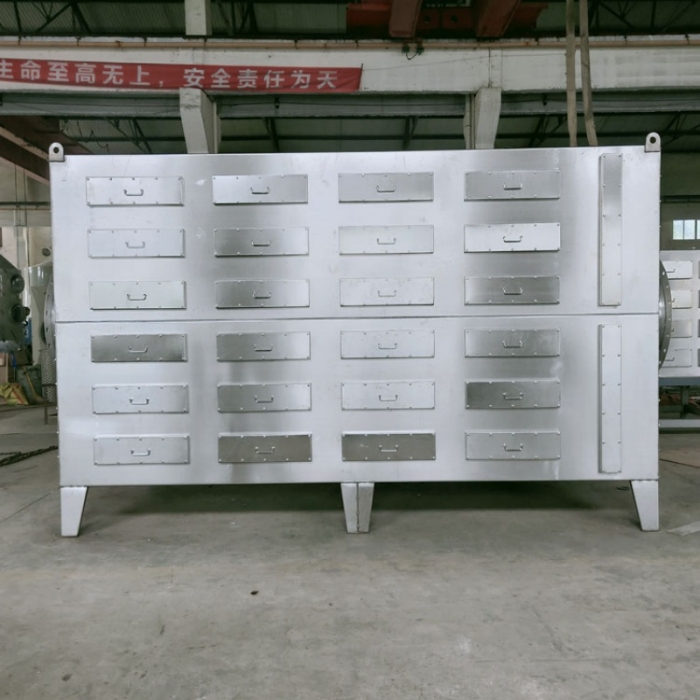
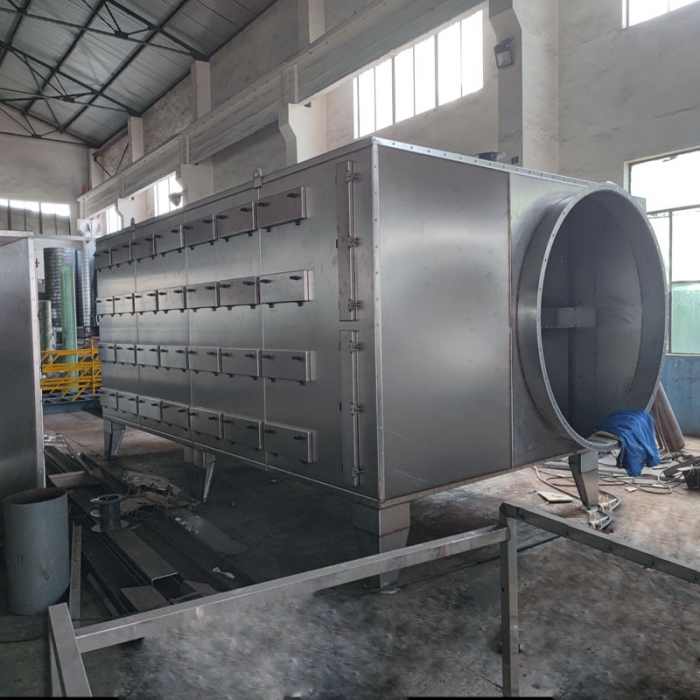
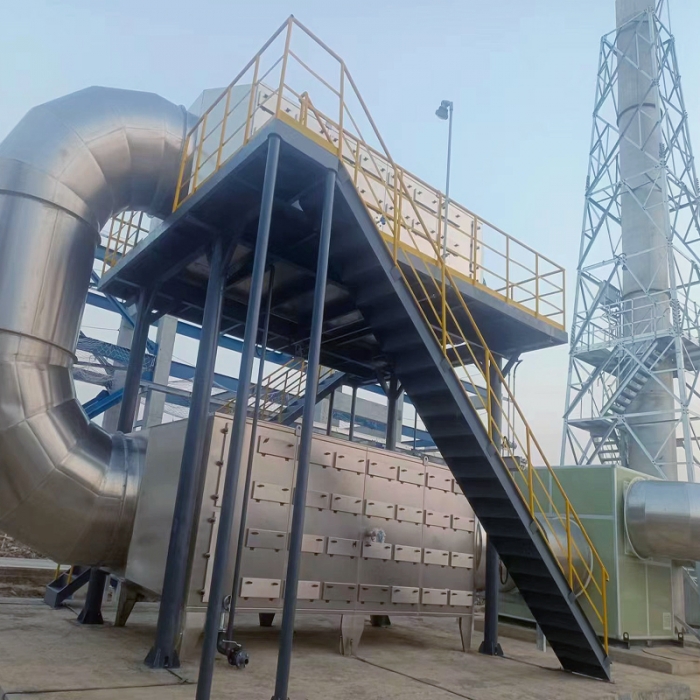
| Name: | Customized Waste Gas Purification Activated Carbon Adsorption Tower Stainless Steel Deodorization Equipment |
|---|---|
Product Description
Customized Waste Gas Purification Activated Carbon Adsorption Tower Stainless Steel Deodorization Equipment
Activated carbon adsorption towers are the most effective purification equipment for treating organic waste gases and odours. Activated carbon adsorption is an effective measure for removing water odours, naturally and synthetically dissolved organic matter, micropollutants and the like. Most relatively large organic molecules, aromatic compounds, halogenated alkynes, etc. can be firmly adsorbed on the surface or in the pores of activated carbon, and it has significant removal effects on humic substances, synthetic organic matter and low molecular weight organic compounds. As an advanced purification process, activated carbon adsorption is often used for the final treatment of wastewater and can also be used for the purification of long-term process water and domestic water.
Product video:  Waste Gas Purification Activated Carbon Adsorption Tower Stainless Steel Deodorization Equipment.mp4
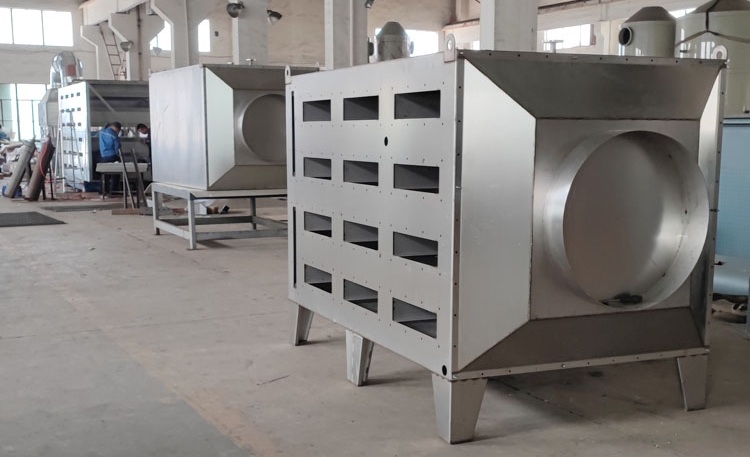
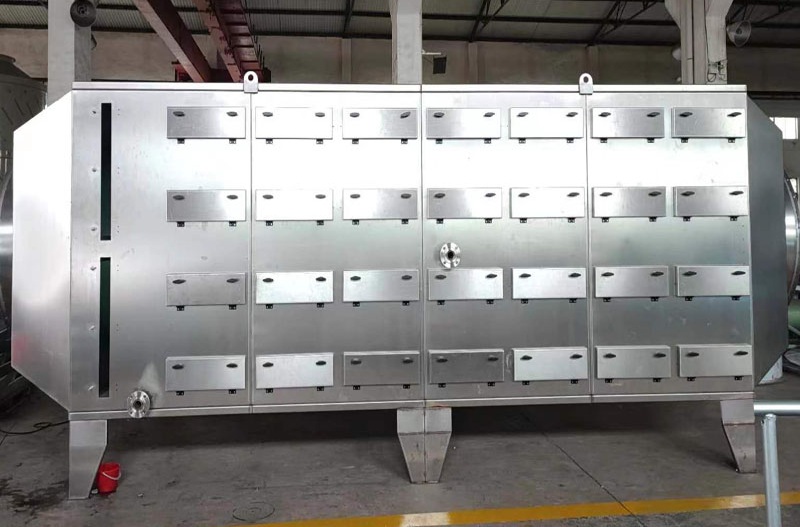
The activated carbon adsorption box is a type of dry exhaust gas treatment equipment. It consists of a box and adsorption units filled inside the box. According to the number of adsorption units and air volume, it is divided into various specifications.
By selecting different packing materials, activated carbon adsorption boxes can treat a variety of exhaust gases, mainly including three categories:
1, acidic exhaust gases and acid mist
2, alkaline exhaust gases
3, organic exhaust gases and odours (benzenes, phenols, alcohols, ethers, tinctures)
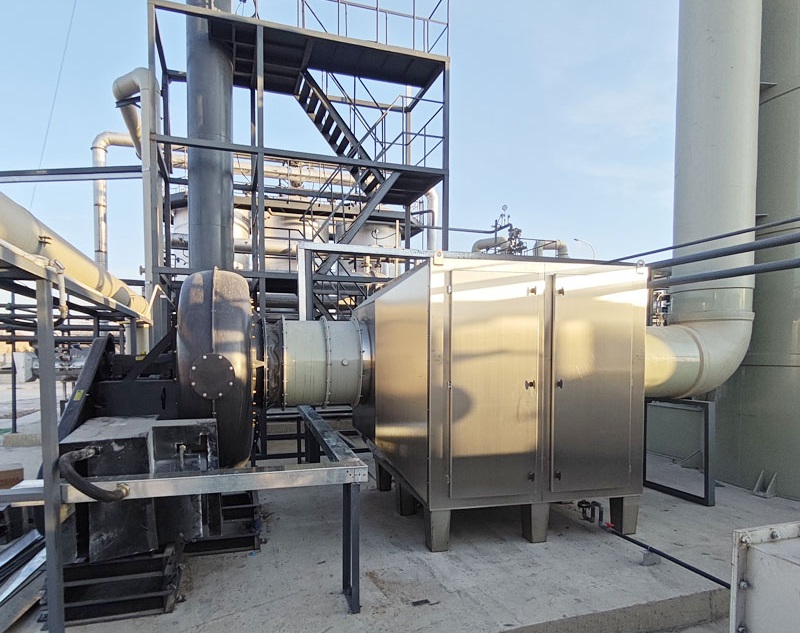
Working Principle
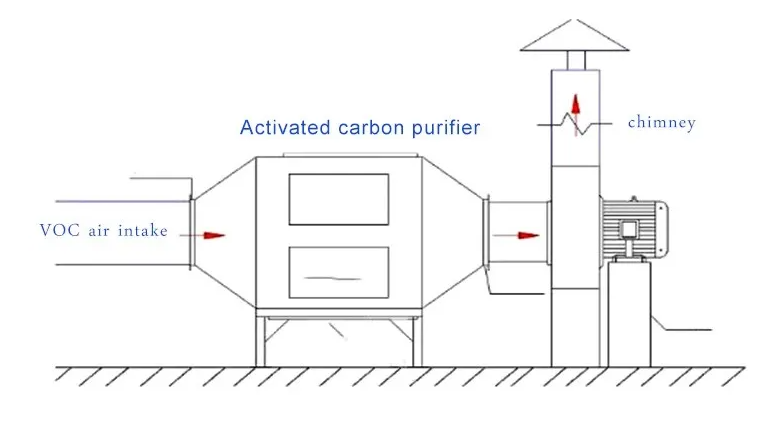
The workshop collects organic gases or particulate matter through hoods, and the organic gases are transported via pipelines into the activated carbon tower. As the organic gases enter the tower, the wind speed decreases gradually, causing larger particulate matter in the gas to naturally settle at the bottom of the tower. Part of the organic gas dissolved in the gas flows into the activated carbon filter layer. When the organic gas enters the carbon layer, it is adsorbed by the activated carbon, while the purified air passes through the carbon layer into the exhaust chamber. After mechanical suction, the gas is discharged into the atmosphere. During the adsorption process of the activated carbon layer, there is a period during which the carbon becomes saturated. The duration of activated carbon saturation is directly related to the concentration of gas in the gas itself and the length of the working time.
Process (main technical) characteristics:
◆ Available in manual and automatic types, with a compact integrated structure, easy to install and maintain;
◆ High filtration rate, large processing capacity, stable operation, minimal equipment footprint;
◆ Filter media has large contaminant retention capacity, high porosity, abrasion resistance, and moderate specific gravity
| Model | Handling air volume(m³/h) | Filtration area(m2) | Activated carbon amount (kg) | Dimensions(mm) | Equipment weight(kg) |
| HXT-2 | 2000 | 1.1 | 300 | 1192*1150*2320 | 100 |
| HXT-3 | 3000 | 1.7 | 450 | 1760*1150*2320 | 120 |
| HXT-4 | 4000 | 2.2 | 590 | 2328*1150*2320 | 150 |
| HXT-5 | 5000 | 2.8 | 740 | 2896*1150*2320 | 180 |
| HXT-6 | 6000 | 3.3 | 890 | 3464*1150*2320 | 200 |
| HXT-7 | 7000 | 3.9 | 1040 | 4032*1150*2320 | 210 |
| HXT-8 | 8000 | 4.4 | 1190 | 4600*1150*2320 | 220 |
| HXT-9 | 9000 | 5.0 | 1340 | 5168*1150*2320 | 240 |
Features
.Technology Integration: Typically consists of multiple integrated units such as exhaust gas collection, pre-treatment, core purification, post-treatment, automatic control, and energy management, forming a synergistic working system.
. High Adaptability: Flexible selection or combination of various treatment technologies based on specific parameters of the waste gas, such as composition (e.g., hydrocarbons, alcohols, benzene series), concentration, flow rate, temperature, and humidity.
.Environmental Adaptability Design: In special regions (e.g., high-altitude areas like Qinghai with significant temperature variations), equipment requires specialized optimizations in sealing, material weather resistance, combustion efficiency, etc., to ensure stable operation.
. High Safety and Reliability: As most organic waste gases are flammable and explosive, the system is commonly equipped with safety facilities such as explosion-proof devices, flame arresters, concentration monitoring and alarm interlock systems, and emergency exhaust.
.High Level of Intelligence: Utilizes an automated control system that monitors real-time parameters like concentration, temperature, and pressure through sensors, enabling automatic start/stop, mode switching, and fault alarm, thereby reducing manual intervention risks.
Functions
1.Exhaust Gas Collection & Pre-treatment: Collects waste gases from production sources via hoods and ducting systems, removing particulates, paint mists, water mists, and other impurities through filters to protect subsequent core equipment:
2.Core Purification & Recovery:
. Adsorption Technology: Utilizes activated carbon or zeolite to adsorb organic compounds from low-concentration waste gas. After saturation, the concentrated organics are recovered via thermal desorption, enabling resource reuse.
. Thermal Oxidation: Oxidizes organic compounds into CO and HO at high temperatures (typically >760C), suitable for medium to high concentration waste gas. Can be equipped with heat recovery units for energy conservation.
. Catalytic Oxidation: Achieves oxidation at lower temperatures (200400C) with a catalyst, consuming less energy than direct combustion. Requires precautions to prevent catalyst poisoning.
. Biological Treatment: Uses microorganisms to degrade biodegradable organic compounds, featuring low operating costs. Suitable for low-concentration, high-flow-rate waste gases.
. Condensation Method: Recovers high-boiling-point organic compounds by cooling and condensation, often used as a pre-treatment for high-concentration waste gases.
3.Post-treatment & Compliant Emission: Applies secondary adsorption or scrubbing to the purified gas to ensure final emissions comply with national or local environmental standards.
4.Energy Recovery & Resource Utilization: Recovers waste heat from the oxidation process to preheat inlet gas or for other heating purposes. Alternatively, reuses the desorbed or condensed recovered organics to lower operating costs.
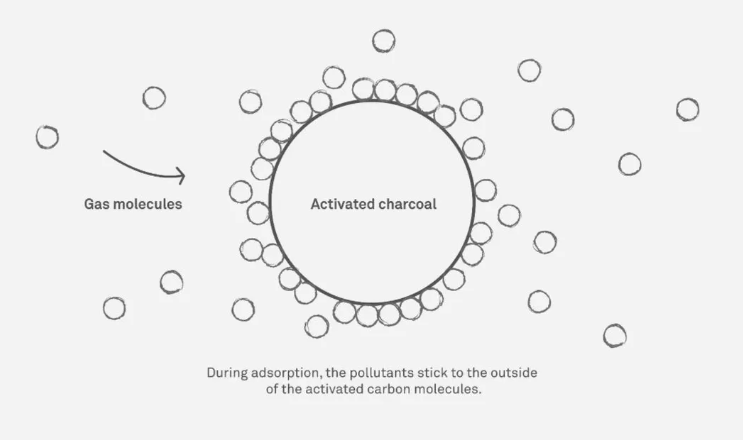
How do carbon air filters trap gaseous pollutants?

 Send Email
 Whatsapp
 QQ
QQ